BMW describes the X5 as a Sport Activity Vehicle (SAV) rather than an SUV, to emphasize its on-road ability despite its size. Like the Lexus RX 300 and Mercedes M-Class, the X5 heralded the shift from truck-based body-on-frame SUVs to sedan-based crossovers that would come to fruition in the late 2000s.
X5s are manufactured in Greer, South Carolina at the Spartanburg BMW plant or Toluca, Mexico at the BMW de México plant.[1]. Since July 2009, some assembly operations are also performed in Kaliningrad, Russia by Avtotor.
In 2003, BMW launched the smaller X3, which uses the "X" prefix for the 4 wheel drive system or BMW "X" drive system and the BMW SAVs which were derivatives of the BMW number-series models.
Contents
* 1 E53 First generation (1999-2006)
* 2 E70 Second generation (2006- )
* 3 Production and sales
* 4 References
* 5 External links
E53 First generation (1999-2006)
BMW X5 (E53) 2004-2006 BMW X5 I6
Model years 1999–2006
Assembly Greer, South Carolina, United States (BMW US Mfg. Co.)
Toluca, Mexico (BMW de México)
Engine 3.0 L 225 hp I6
4.4 L 286 HP (2000–2003) 315 HP (2004–2006) hp V8
4.6 L 347 hp V8
4.8 L 355 hp V8
3.0 L 193/218 hp I6 Diesel
Transmission 5-speed automatic
5-speed manual
6-speed automatic
6-speed manual
Wheelbase 111.0 in (2,819 mm)
Length 183.7 in (4,666 mm)
Width 73.7 in (1,872 mm)
Height 2000–2003 V8: 67.2 in (1,707 mm)
2001–2003 I6: 67.5 in (1,715 mm)
2004–2006 V8 4.8I: 67.9 in (1,725 mm)
2004–2006 I6: 69.3 in (1,760 mm)
Related BMW 5 Series
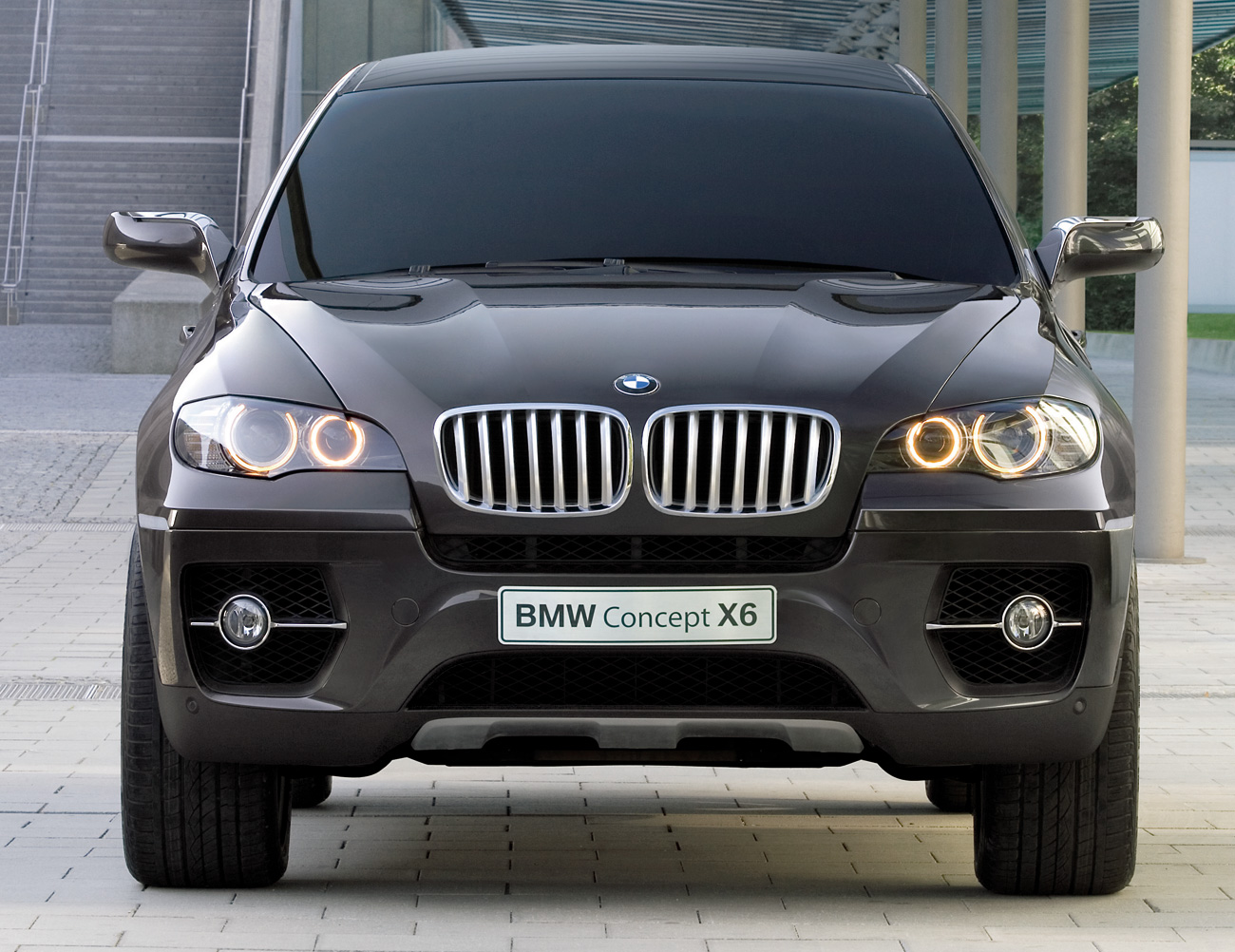
BMW X-Coupe
Main article: BMW X5 (E53)
The BMW E53 X5 crossover vehicle was made between 1999 and 2006. Production ceased September, 2006 and has been replaced by the BMW X5 (E70).
The E53 was developed at a time when BMW still owned Land Rover and as such shares many components and designs with both Land Rover Range Rover HSE model; specifically the Hill Descent System and Off Road Engine Management system and also the BMW E39 5-series; specifically the engine and electronic system. The entire in car entertainment system (Radio Function, Navigation System, Television and Telecommunications systems, and very flexible automotive computer system) are identical. As a result the X5 model earlier models can be easily upgraded with the newest BMW technologies. However, despite selling well, these vehicles have acquired a reputation for chronic unreliability, especially with their electronics which are complex and prone to expensive failure. Customer satisfaction surveys in Europe place them well down the list.
A range of gasoline inline-6s, V8s and diesel engines are offered.
 bmw x5
 bmw x5
 bmw x5
 bmw x5
 bmw x5
 bmw x5
 bmw x5
 bmw x5
 bmw x5
 bmw x5
 bmw x5
 bmw x5




 bmw motorcycles